0

Voorburg · Den Haag · remote

WE BUILD THINGS THAT THINK.

Websites with soul, and homes with a brain. We design the system, build it, and prove it works by living in it first.

Scroll
0Live client sites
0Devices mapped
0Runs locally
0Home as our lab
What we do

Two crafts, one way of thinking.

We are a small studio. That means you talk to the person who builds it. No account managers, no template shops, no monthly platform you can never leave.

Websites

Hand-built, fast, and animated the way the big studios do it. No WordPress bloat, no cookie-cutter theme. Your site is written for you and it is yours to keep.

  • Custom design and copy direction
  • Motion engine: scroll, reveals, custom cursor
  • Runs anywhere, deploys in minutes
  • You own the code, no lock-in
From €1.000
Smart homes

Not a shelf of gadgets that each need their own app. One local brain that senses the whole house and quietly acts on it. Lights and warmth follow you. It locks itself when you leave.

  • Home Assistant, fully local, no cloud dependency
  • Presence, climate, light, security, energy
  • Voice control powered by Claude
  • Full plan and shopping list before you spend a euro
From €450 design · €1.950 to €10.000 built

AI systems

The layer that ties it together. Agents that read your data, answer in plain language, and do the boring work. We have shipped these in production, not just in demos.

  • Conversational agents over your own data
  • Document, email and reporting automation
  • Any model: Claude, Gemini, OpenAI, local
  • Glue between systems that were never meant to talk
Scoped per project
Integrations

If it has an API, we wire it in.

Most studios do websites or hardware or automation. We do the seams between them, which is where projects normally die. One brain, one bill, one person to call when the lamp and the spreadsheet need to talk to each other.

01

AI and models

  • Claude, via API or Vertex
  • Gemini and Vertex AI
  • OpenAI and open models
  • Local models on your own box
  • Agents, RAG, tool use, MCP
  • Voice assistants and STT/TTS
02

Cloud and data

  • Google Cloud, Cloud Run
  • BigQuery and Firestore
  • Postgres, MongoDB, SQLite
  • Docker and Terraform
  • Auth, SSO and identity
  • Your own server, if you prefer
03

Home and hardware

  • Home Assistant, ESPHome
  • Zigbee, Z-Wave, Matter, Thread
  • MQTT and Modbus
  • WLED, DMX and Art-Net
  • Hue, Sonos, Nuki, Aqara, Shelly
  • Raspberry Pi, ESP32, sensors
04

Web and software

  • Hand-built sites and web apps
  • React, vanilla JS, Python, FastAPI
  • Shopify, WordPress, headless CMS
  • Payments and booking flows
  • Existing codebases, taken over
  • Legacy systems, wrapped in an API
05

Business tools

  • Google Workspace and Sheets
  • Microsoft 365 and Outlook
  • Slack, WhatsApp, Teams
  • CRM, ERP and invoicing
  • Excel models, turned into software
  • Anything with a webhook
Not on the list? Ask anyway. We have connected stranger things than yours. If a system has an API, a database, a serial port or even just a spreadsheet coming out of it, it can be automated. If it genuinely cannot be done, we tell you that on the first call instead of billing you to find out.

Most smart homes are a drawer full of apps. We build one brain that knows where you are, what is open, what is running, and what you probably want next. Then we make it beautiful enough that you want to show it to people.

The reference project

We built it in our own house first.

A full masterplan for a two-floor maisonnette in Voorburg: seventy-plus devices, one local brain, nine pillars of automation and a light show that actually works. The house senses you, heats only the rooms you are in, talks back, scares off anyone who should not be there, and keeps the plants alive while you are away. If it survives our own home, it is ready for yours.

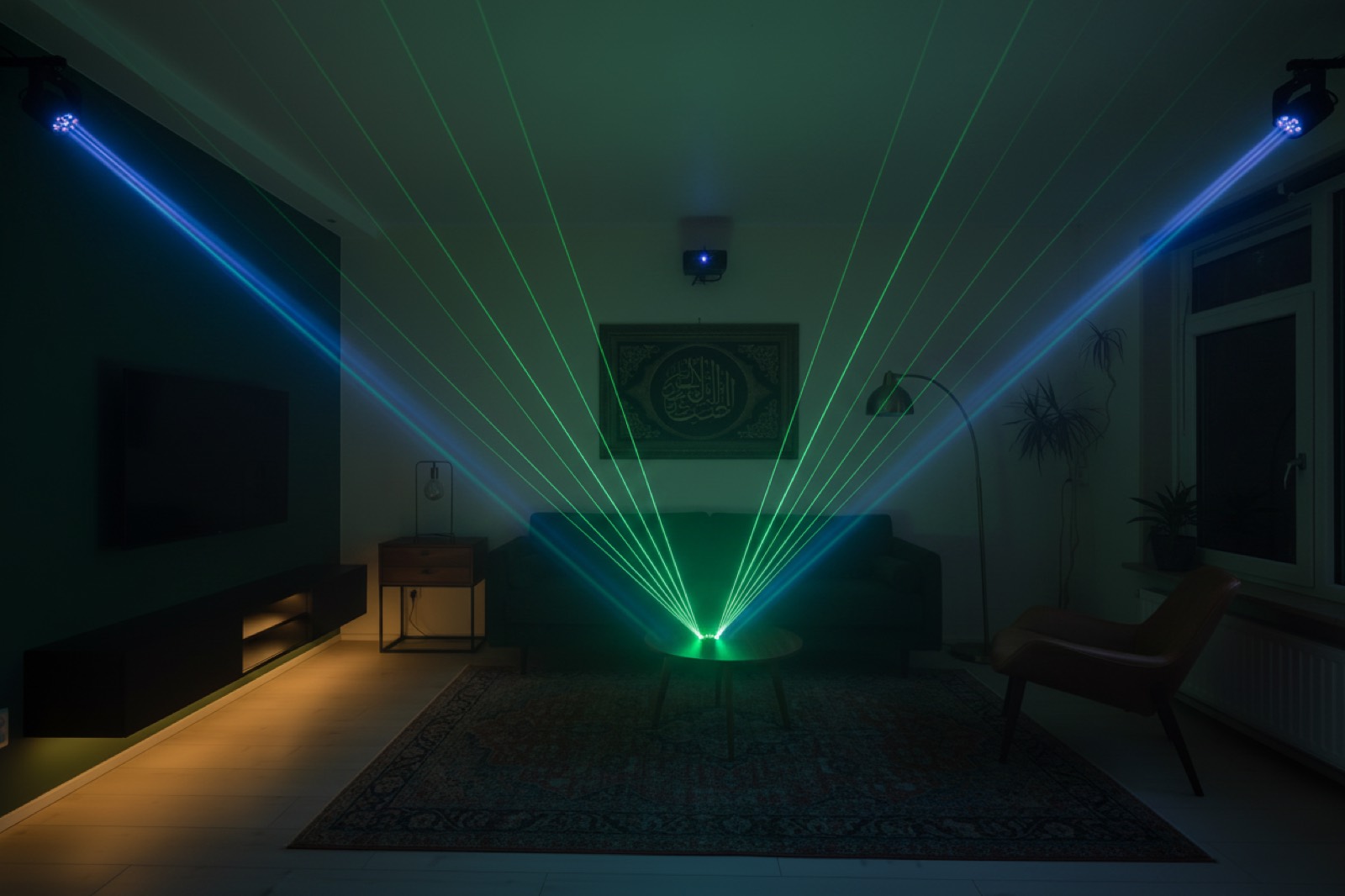
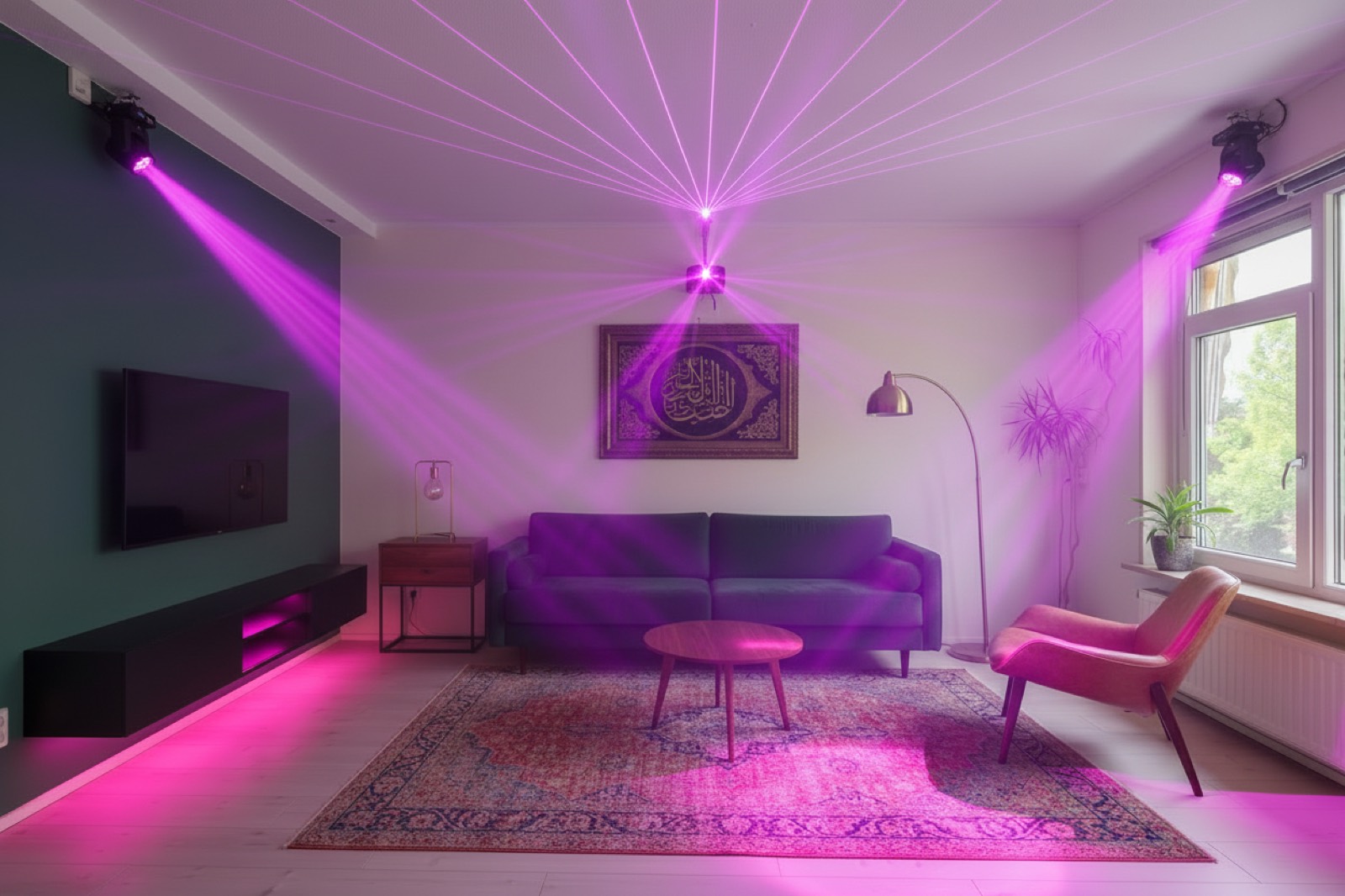
Living room in party mode: two moving-head spots and a laser tunnel through haze
Party mode, one sentence away Two moving heads, a class 3R laser and a whisper of haze, beat-synced and choreographed. The curtains close themselves when the show starts. Say “Claude, light show”
The vision

Nine things a house should just do.

01

The flat is aware

Presence radar, motion, door, window, temperature and humidity sensors give the house a live model of both floors: who is where, what is open, what is running. Every other pillar is built on this.

02

Light and warmth follow you

No switches pressed. Rooms light up as you enter, in the right colour for the time of day. Radiators heat only occupied rooms, and the bedrooms idle at 16 degrees until someone actually sleeps there.

03

The house has a voice

Voice satellites in the living room, kitchen and master bedroom. Not robot-speak: say “it is a bit gloomy in here” or “why is the office cold?” and the house answers from live sensor data.

04

It defends itself

Leave, and it locks, arms, drops the heating and kills standby power. Leak sensors guard the bath, the sink, the shower and the boiler corner. Smoke and CO alerts reach your phone anywhere on earth.

05

It runs itself

The robot vacuum cleans while you are out. The bathroom fan runs exactly until the fog is gone. Curtains track the sun. The washer and dryer report when they are done.

06

The Reactive Spiral

A matte black spiral staircase with one continuous amber light ribbon and a laser distance sensor per step. Light pours ahead of your feet, up or down, stops when you stop, and works in total darkness.

07

It can throw a party

Every light snaps to drifting purple and red, the LED ribbons run moving gradients, Spotify plays in sync on every speaker on both floors, and the concert rig wakes up. “Party's over” resets the whole flat.

08

It pretends you are home

The cameras know your faces. A stranger working the lock at 3am gets a house that wakes up: lights on upstairs, a television murmuring, and a large dog barking at the door. Most break-ins end right there.

09

It keeps the plants alive

A watering robot works its round on a moisture schedule, and a camera pass reads leaf colour for early yellowing or droop. You get told a plant is struggling in the week it starts, not the week it dies.

And it stays yours

Everything except the cameras and Spotify runs one hundred percent locally. An internet outage does not break your home, and the whole system moves with you if you ever sell.

Security

An empty house is an invitation.

Every burglar reads the same signals: dark windows, no movement, no sound. The cheapest deterrent in the world is a house that refuses to look empty. So we built one that lies convincingly.

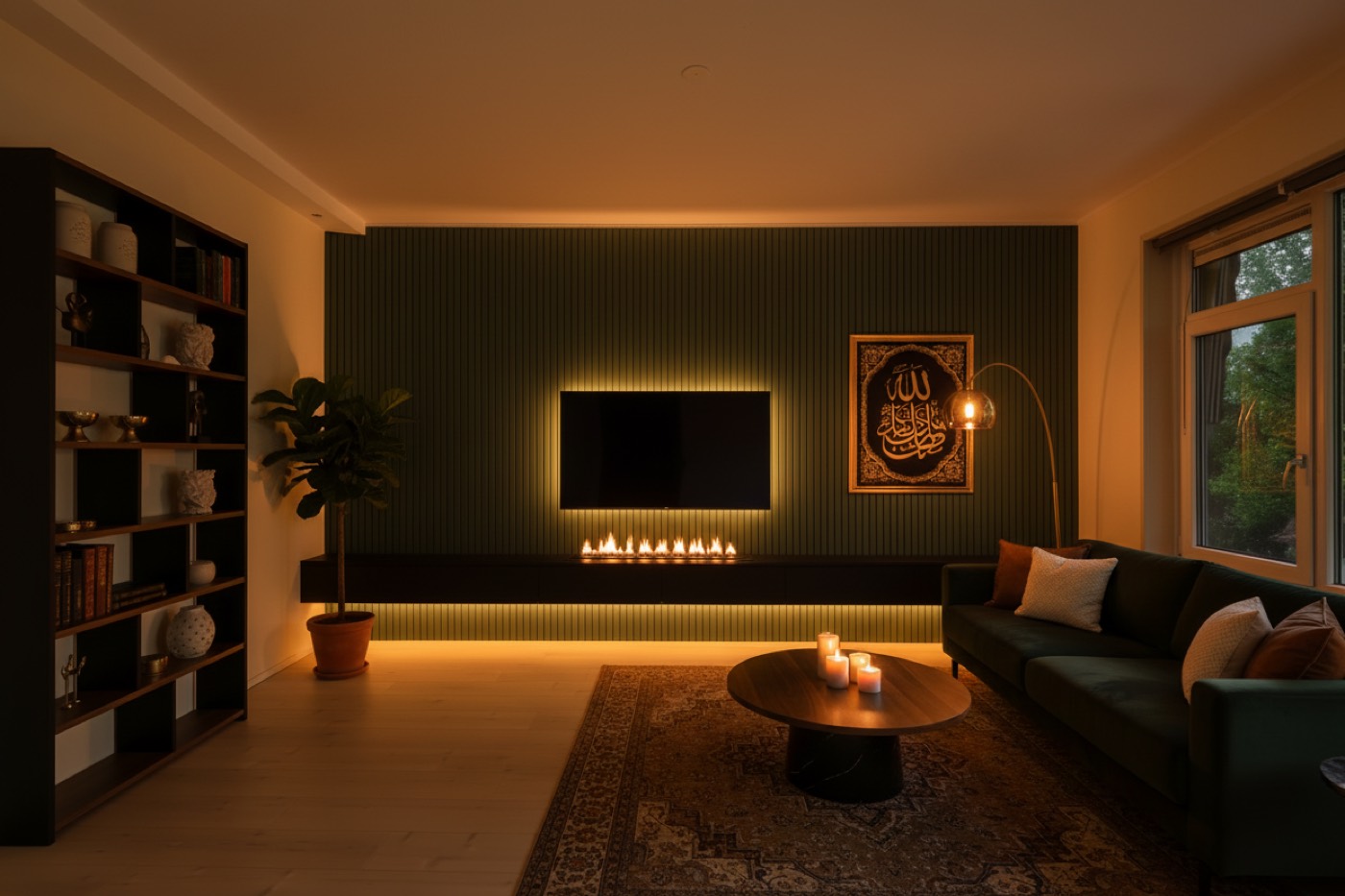
The living room at night, lit low

It knows your face. It does not know his.

The hallway camera runs recognition locally. You, your family and anyone you have added walk in and nothing happens. Someone it does not know, at the door, at an hour you are never home, and the flat stops being polite.

Alarms make burglars work faster. A house that seems occupied makes them leave. That is the whole design goal.

0.0s

Unknown face at the voordeur. Matched against nobody. Clock and presence say the flat should be empty.

1.5s

Upstairs lights come on. Bedroom first, then the landing, in the order a woken person would use them.

3.0s

Sound. A television at conversation volume in the woonkamer, and a large dog barking at the front door.

4.0s

Your phone. Live camera, anywhere on earth. You decide whether to escalate to the siren or call it a delivery.

on entry

If the door actually opens, every light on both floors goes to full, the siren arms, and the recording is already saved.

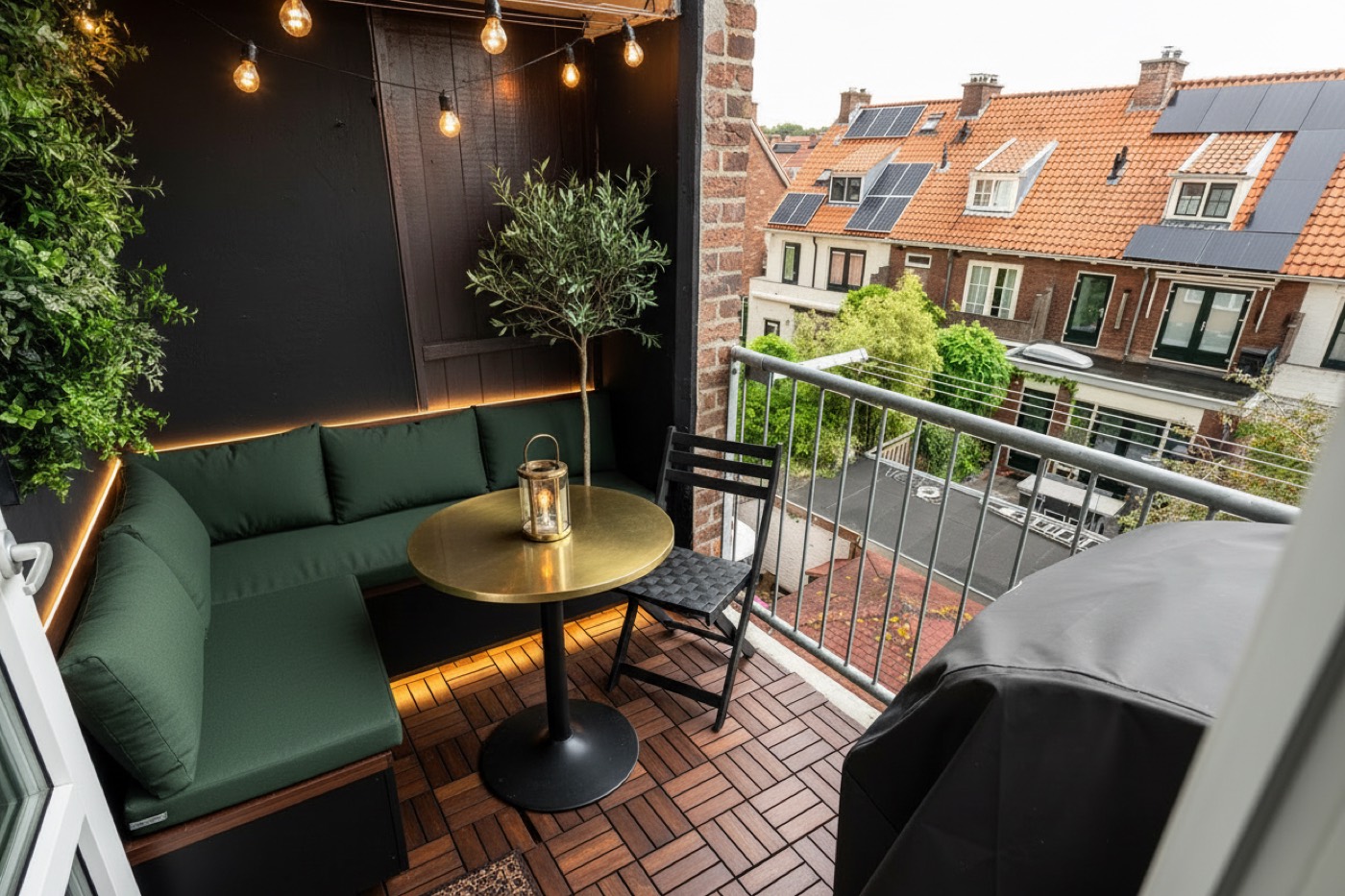
The balcony with plants

Nobody kills a plant on purpose.

They die because you were away for ten days, or because the one in the corner needed water on a different rhythm than the rest and nothing told you. Both are scheduling problems, and scheduling is what this house does.

A watering robot runs its round from soil moisture rather than a calendar, so the thirsty ones get more and the succulents get left alone. On the same pass a camera reads each plant: leaf colour, droop, new growth. Yellowing gets flagged in the week it starts.

Go on holiday. Come back to plants that are alive, and a log of what they needed while you were gone.

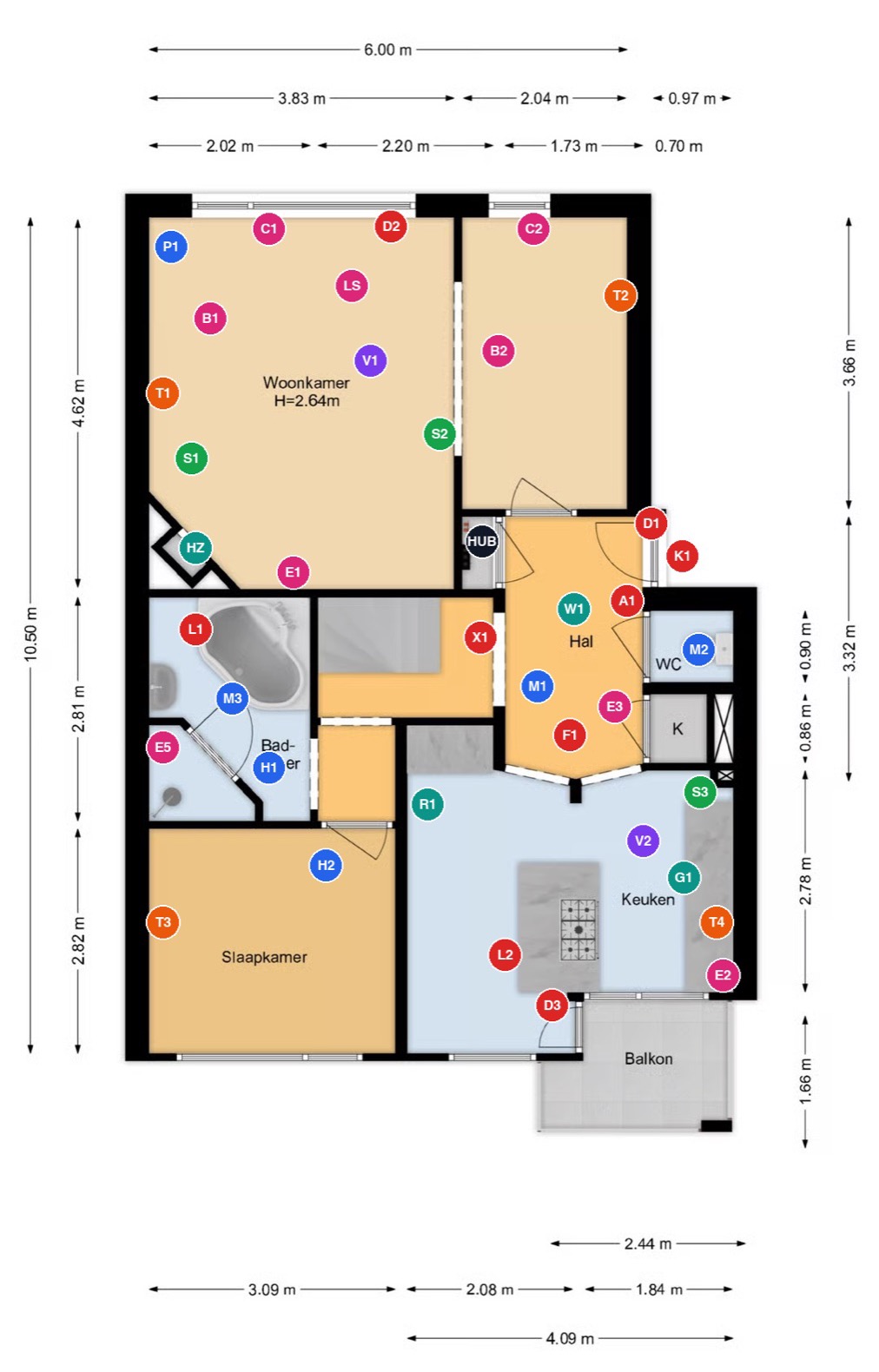
The device map

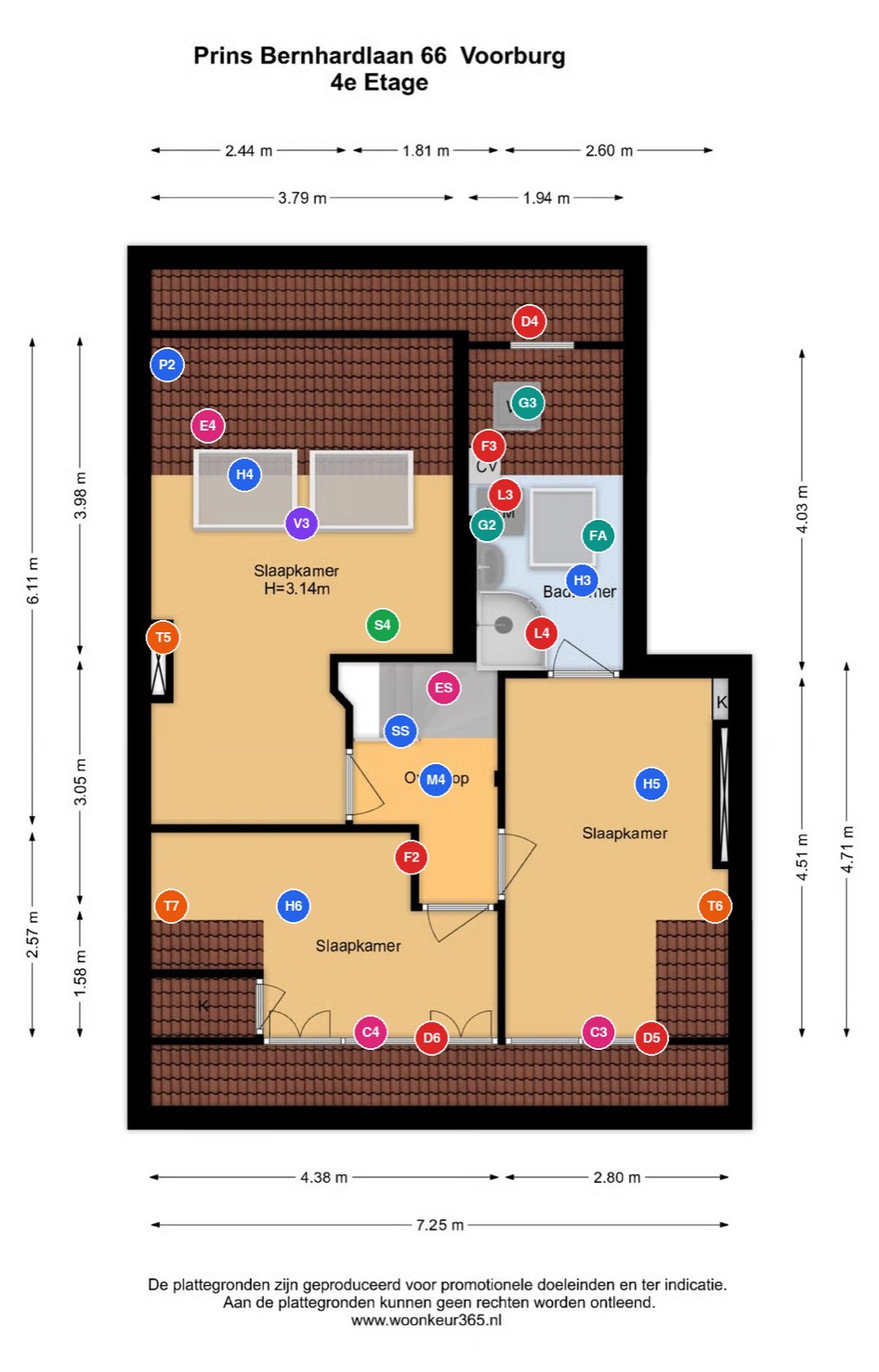
Every sensor, placed on the plan.

Before anything is bought, every device gets a marker, a room and a reason. This is what you get on day one of a design engagement.

Floorplan of the third floor with every smart device marked Floorplan of the fourth floor with every smart device marked

Marker legend

HUB

The brainHome Assistant Green plus a Zigbee/Thread radio, in the meterkast, wired to the router.

V

Voice satellitesThree rooms where you can just talk to the house, answered by Claude.

PMHSS

AwarenessPresence radar, motion, temperature and humidity, and the per-step stair sensors.

T

WarmthSeven smart radiator valves, driven per room and tied into the boiler.

S

SoundMultiroom Spotify across both floors, in perfect sync.

CEESBLS

Light and showCurtains, five continuous COB LED zones, the stair ribbon, moving heads and the laser.

KDLFAX

DefenseSmart lock, door and window contacts, leak, smoke and CO, camera and siren.

WGRFAHZ

AutopilotWall tablet, metering plugs, robot vacuum, humidity-driven fan and the haze machine.

The centrepiece

The Reactive Spiral.

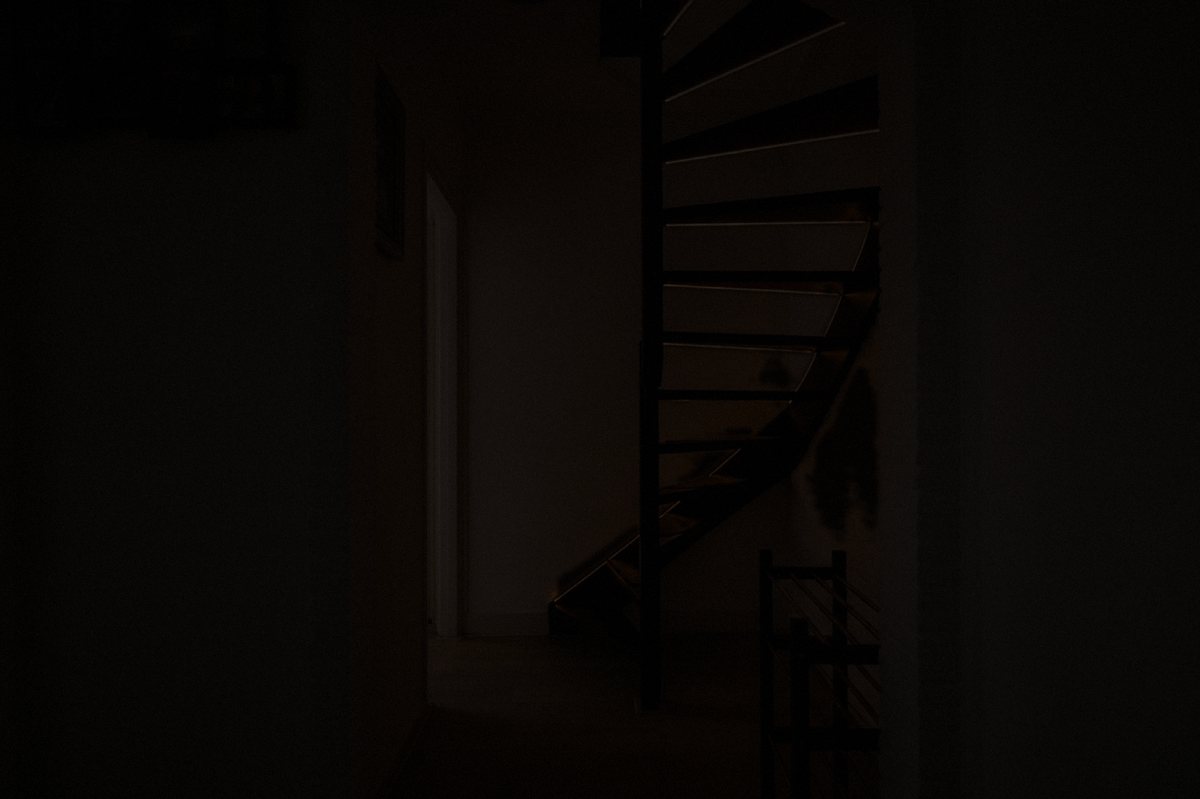
Five metres of addressable neon flex under the handrail, fourteen time-of-flight laser sensors on the centre column, one per tread. Light pours ahead of your feet in under 100 milliseconds. Click-together modules, zero soldering.

The spiral staircase in the dark, seen from the hallway
STEP 00/ 14 TREADS · ToF <100ms
Light pours ahead of your feet One tread per sensor. Walk up and it runs up. Walk down and it runs down. Stop, and it stops with you.
The show engine

Dinner, movie, or full concert.

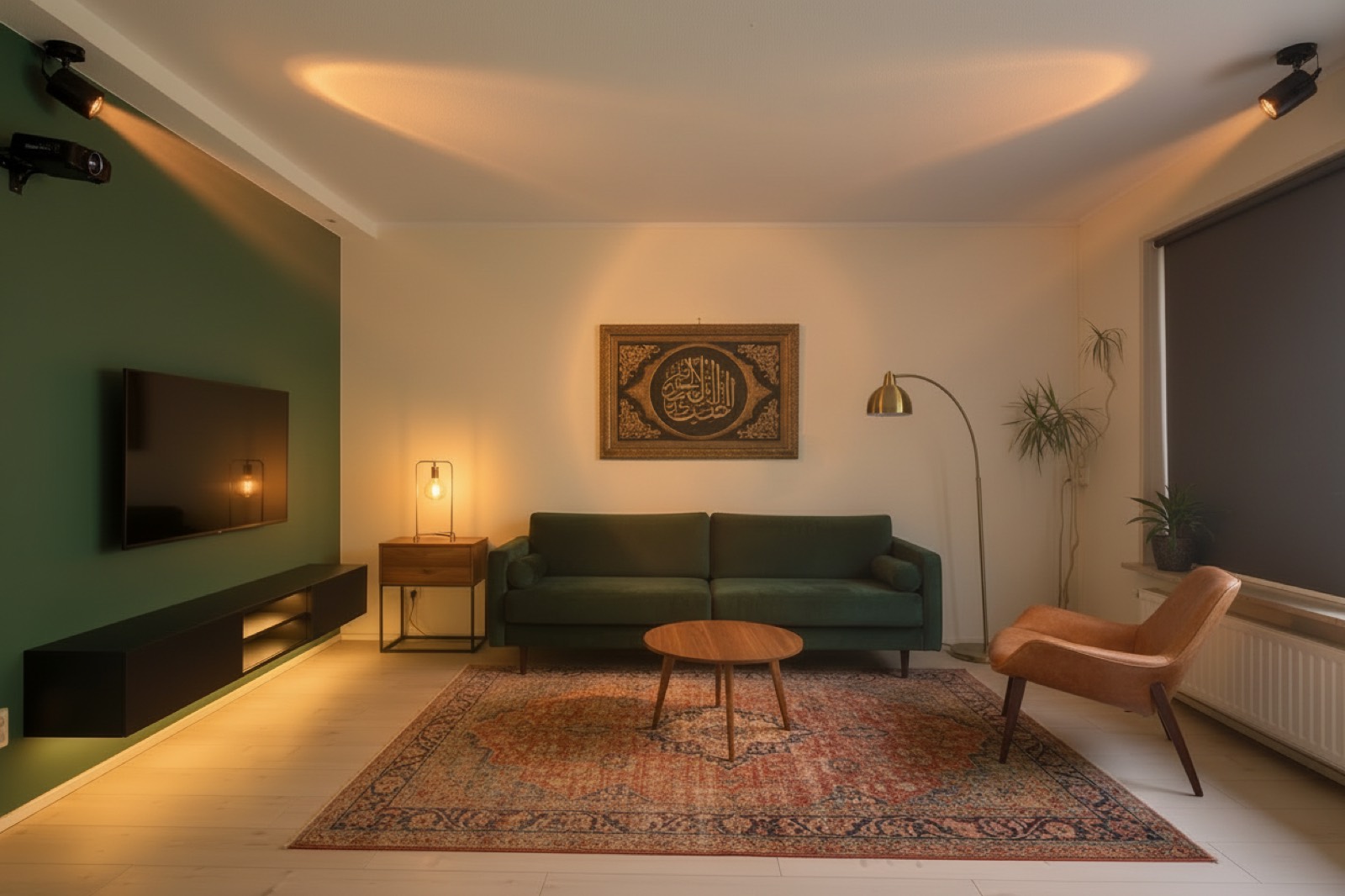
Fixtures patched over Art-Net, chases programmed for every mood. Safety rules live in software: beams stay above eye level, the show only runs inside party scenes, and everything cuts the instant the front door opens.

Living room in warm dinner lighting
Dinner mode
Living room in full party mode
Party mode
Laser tunnel across the living room
Laser tunnel
Room by room

What it feels like.

Living room at night
Woonkamer, avond
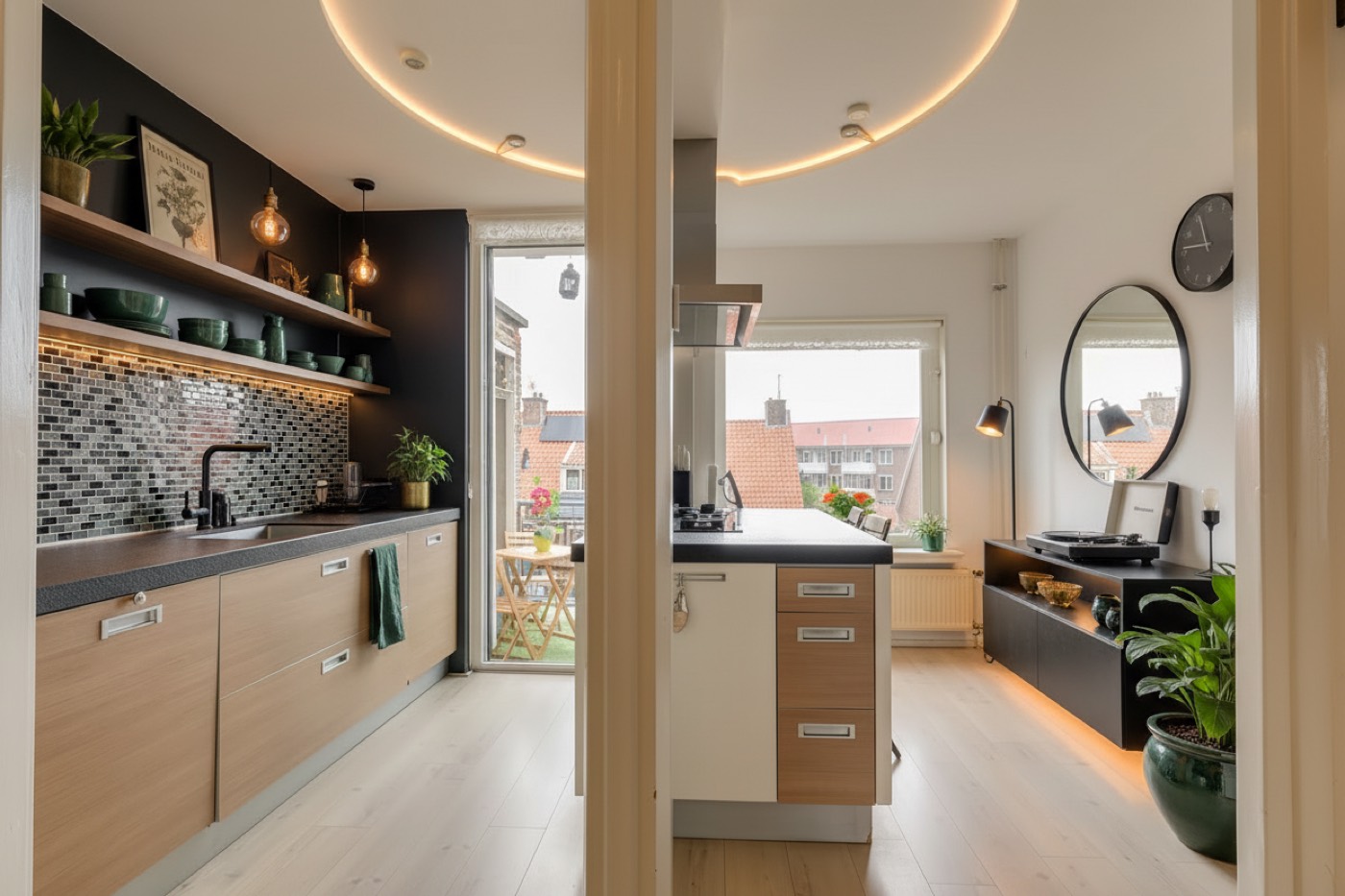
Kitchen
Keuken
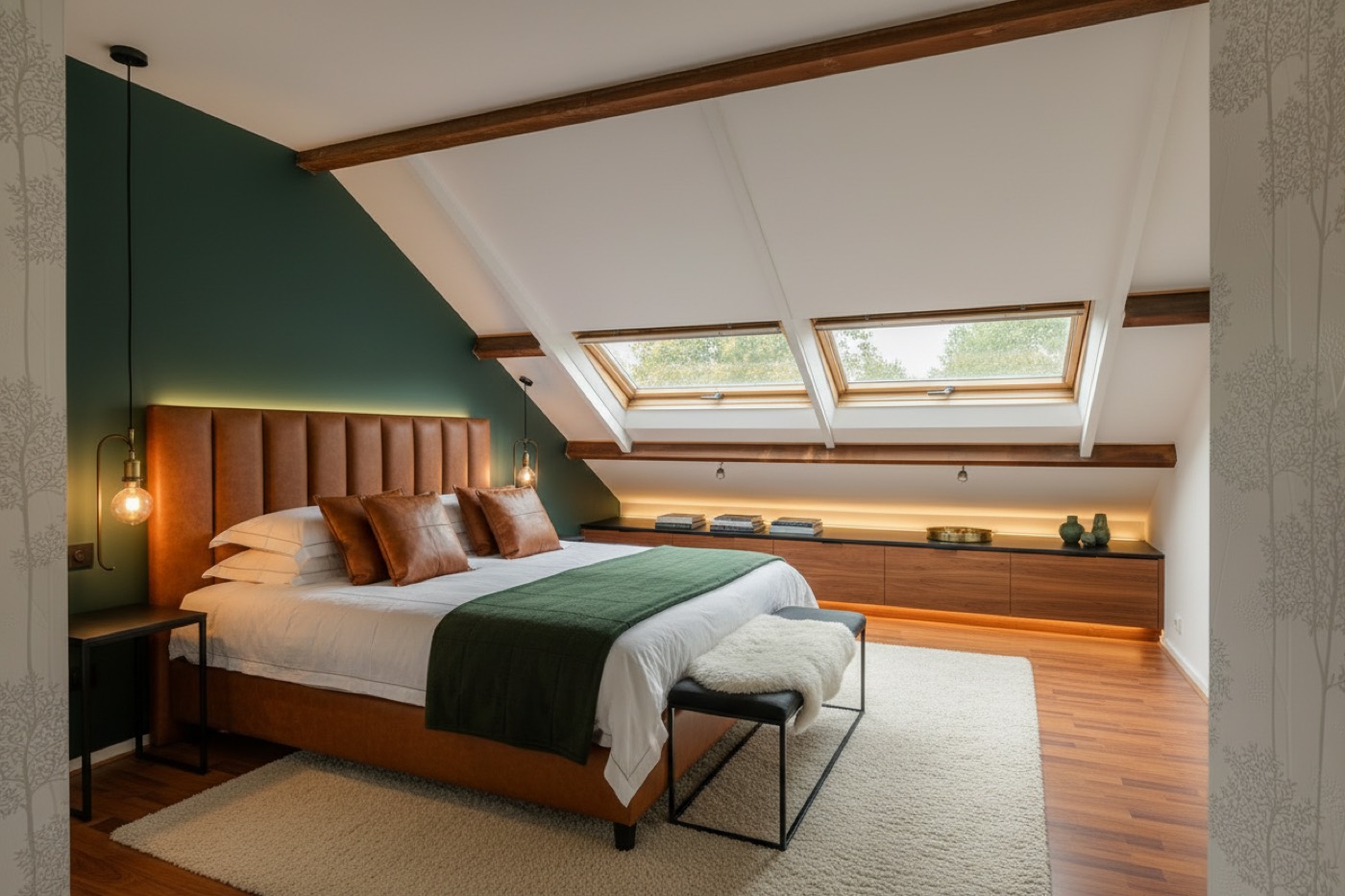
Master bedroom
Master bedroom
Balcony
Balkon
The build

Four phases, no big bang.

You never have to buy it all at once. Each phase stands on its own and the house is already better at the end of it.

01The brain awakens~€620
Home Assistant Green, the Zigbee radio, both presence radars, every motion, door, window and climate sensor, and the first voice satellite. The flat becomes aware and you can already talk to it. One weekend of work.
02Light and warmth~€1.880
Bulbs, in-wall dimmers that work without a neutral wire, all seven radiator valves, the OpenTherm gateway, curtains, five continuous COB LED zones and the Reactive Spiral kit. This is when the flat starts feeling alive, and when the energy savings start.
03Sound, party and the light show~€1.480
A Sonos stereo pair, two bookshelf speakers, the two remaining voice satellites, and the concert rig: two moving heads, the laser, the haze machine and the Art-Net node. Party mode goes live the same day.
04Defense and autopilot~€1.050
Smart lock, smoke and CO detection, four leak sensors, camera, siren, metering plugs, humidity-driven fan control, the wall tablet by the front door and the robot vacuum.
Full hardware budget, this flat €5.030
Shops

robbshop · Coolblue · TinyTronics · Bax Music · IKEA

Request the full masterplan
What it costs

Four packages. No surprises.

Hardware is passed through at cost and itemised, so you always know what is a device and what is our work. Start anywhere, stop after any phase, add the rest later. Nothing we install depends on us staying involved.

01 · Design only

Blueprint

The full plan for your home. You buy the hardware yourself and build it at your own pace.

€450
incl. btw
Hardware: you buy it
  • Visit and full walkthrough of your home
  • Every device drawn on your floorplan
  • Itemised shopping list with prices and shops
  • Phase plan so you can spread the cost
  • Fee is credited if you later have us build it
Book a blueprint
02 · Phase 1

Aware

The brain and the senses. The house knows where you are and you can already talk to it.

€1.950
incl. btw · hardware included
Of which hardware: €620
  • Home Assistant hub, installed and configured
  • Presence radar, motion, door, window, climate
  • One voice satellite with Claude
  • App on your phones, dashboard set up
  • Usually done in a single weekend
Start here
03 · Phase 1 + 2

Alive

Light and warmth start following you around. This is the phase people actually feel.

€5.500
incl. btw · hardware included
Of which hardware: €2.500
  • Everything in Aware
  • Smart radiator valves on every radiator
  • In-wall dimmers, bulbs and curtain motors
  • Continuous COB LED zones, no visible dots
  • Per-room heating, where the savings start
Most chosen
04 · All four phases

Everything

The whole masterplan, exactly as we built it in our own home. Nothing left out.

€10.000
incl. btw · hardware included
Of which hardware: €5.030
  • Everything in Alive
  • Multiroom sound and voice in three rooms
  • The light show: moving heads, laser, haze
  • Locks, cameras, smoke, CO and leak sensors
  • Presence simulation against break-ins
  • Robot vacuum, plant care and the wall tablet
Build the lot
Prices are all-in

Design, hardware, installation, configuration and a handover session. The only extra we ever quote separately is a licensed electrician for in-wall dimmers, billed at cost, roughly €150 to €250 for a whole house.

Want less, pay less

These are starting points, not menus. Skip the light show, drop the curtains, keep your own speakers. We requote in a day and the price only ever goes down when you remove things.

No lock-in, ever

No subscription, no monthly fee, no cloud account you have to keep alive. You own the hub, the hardware and the configuration. If you sell the house, it comes with you.

How we work

Plan first. Then plug things in.

The reason the project above works is that nothing was bought until the whole thing was drawn. That is the method, for a house or for a website.

01

Walk it

We come to you, walk the space or the business, and write down what actually annoys you. No spec sheet yet.

02

Draw it

You get the plan: every device on the floorplan, or every page and section, with a reason and a price next to it.

03

Build it

We build in phases you can stop after. Hardware clicks together, code is written by hand, and you see it working.

04

Hand it over

You own the code, the config and the hardware. We show you how it works, and we stay reachable when you want more.

Let's talk

Got a house, a brand, or a problem that should solve itself?